“the dethroned king”
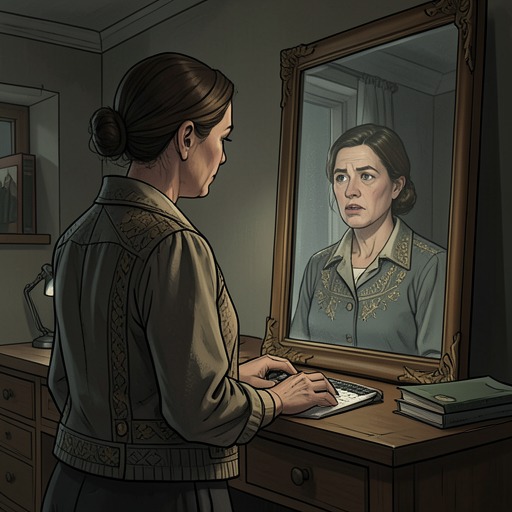
Elena Knows“the dethroned king” is Elena’s image for a brain that can no longer reliably govern her body. As Parkinson’s disease disrupts the movement of commands from brain to feet, the phrase turns an intimate physical limitation into a figure of lost authority. It is not merely a metaphor she states once: repeated alongside the illness she calls Herself and dopamine, it becomes part of the verbal ritual by which she waits for her medication to work and tries to make sense of a body that no longer obeys her.
Origin and Meaning
Elena forms the image while recalling Dr Benegas’s explanation of Parkinson’s disease. He described the degradation or alteration of nerve cells and the resulting failure to produce dopamine. Elena understands this through a chain of command: the brain orders the feet to move, but the order reaches them only if dopamine carries it. She imagines dopamine as a messenger and the brain as a king whose authority has been displaced. The body’s problem is therefore also, in her private vocabulary, a crisis of rule: the source of the command remains, but its power to secure obedience has diminished.
The phrase sits beside another image from a story Elena used to tell Rita when she was little: the emperor with no clothes. Elena dislikes that image because it means nakedness; she prefers the dethroned king. The distinction matters to her. Her chosen figure describes lost power without the exposure she associates with the emperor, and its repeated use lets her name a change in bodily authority without pretending that she can reverse it. The expression is part of an improvised explanatory system, not a clinical account: Elena knows what is happening inside her because she experiences it, while some of the doctor’s terminology remains difficult for her to understand.
Repetition and the Waiting Body
The image acquires force through repetition. Elena silently recites it with Herself, her name for the illness, and the messenger, her name for dopamine. She breaks the terms into pairs and turns them over in sequence, much as she rehearses street names on her way to the station. In this verbal pattern, the dethroned king is not an isolated symbol but one component of a portable vocabulary that keeps her company while she waits.
That waiting is physical and timed. Elena hopes the pill will dissolve and travel through her body to her feet, allowing them to receive the message to move. Nervousness can make the medication take longer to work, and on the morning of her journey she must wait until her right foot responds before she can stand. She then uses the method Dr Benegas taught her: rocking forward from a chair to rise, followed by deliberate, small steps. The king’s lost authority is thus set against the practical work of movement. Elena can name the failure of command, but getting to the ten o’clock train still depends on medication, technique, and the feet’s eventual response.
Rita and the Shared Past
The figure also carries the memory of Rita’s presence during Elena’s earlier experience of travelling by train to Buenos Aires. At that time, Rita sat beside her, helped her put on a sleeve, and pushed her through the train door when Elena struggled to board. The journey included impatience and an argument: Rita urged her mother to try harder, while Elena answered sharply. Remembering that trip, Elena recognizes both Rita’s practical assistance and the strain that her illness placed on them. The image of the dethroned king belongs to a vocabulary Elena now repeats alone, but the journey it accompanies recalls a time when Rita’s body could help her do what her own body made difficult.
That remembered assistance deepens the expression without turning it into a claim that Elena has simply surrendered. She continues trying to walk and to manage the route, even while acknowledging that effort cannot always overcome the illness. Her feet are not just disobedient in her account; they are deaf to the brain’s commands. The dethroned king gives that estrangement a political shape, while the slow, repeated steps show its daily consequences.
Narrative Role and Significance
As Elena travels to seek Isabel’s help in investigating Rita’s death, the phrase joins street names, stations, medication, and the other figures she recites. Her physical limitations make her seek another person’s body to ask questions, look directly at people, and investigate what she cannot uncover by herself. The expression therefore marks both a limit and a condition of her journey: the king cannot be restored to the throne, but Elena continues forward, counting and repeating as she goes.
The image also stands apart from the language used by others to interpret Rita’s death. At Rita’s funeral, Father Juan’s prayer speaks of a just soul, eternal life, and resignation. Elena cannot honestly repeat that prayer, though she recognizes that its words remain inside her. Her own recitations—streets, levodopa, dopamine, Herself, and the dethroned king—do not promise consolation or return. They give form to what she can observe and endure. The phrase’s significance lies in that double work: it registers the loss of bodily command while helping Elena continue through the intervals when movement, and certainty, are beyond her reach.